Smartphones and apps can make attention feel scattered. Many people think they are “just relaxing” when they pick up a phone, but repeated checking increases cognitive load and breaks focus across the day.
Compulsive use often ties to online worlds more than the device itself. That pattern can disrupt work, school, and relationships. The short relief of a glance can worsen anxiety and reduce face-to-face connection.
This piece serves as a practical, evidence-informed guide. It does not demand quitting technology. Instead, it shows how checking habits form and which step-by-step changes reduce distraction while keeping essential communication intact.
The core promise: readers will learn how cognitive load works, why phone addiction forms, and concrete strategies to protect productivity, mood, and overall health without unrealistic expectations.
Key Takeaways
- Repeated phone checks reset attention and increase mental strain.
- Screen time that fragments tasks harms productivity and mood.
- Practical steps can reduce phone addiction behaviors without total abstinence.
- Small routine changes protect work, school, and family time.
- Addressing habits supports better focus and overall mental health.
Why screen time feels mentally exhausting in today’s always-on life
In today’s always-on world, constant digital checks drain mental energy faster than people notice.
Cognitive load explained: when the brain runs out of bandwidth
Attention is a limited resource. Each rapid switch between tasks forces the brain to reload context, which wastes time and focus.
Heavy phone use can overwhelm working memory so that concentrating for more than a few minutes feels difficult.
How constant pings, feeds, and multitasking fragment attention
Short checks add up into hours. Notifications, feeds, and quick searches stack across the day and leave people feeling busy but unproductive.
- Multitasking is rapid switching, not real parallel work; accuracy and comprehension fall.
- Persistent alerts create a pressure to reply, raising perceived urgency and stress.
- Unplanned checking driven by boredom or social cues fragments deep work and drains energy.
Intentional use, like a scheduled call, differs from reflexive checking triggered by uncertainty or others’ expectations. Recognizing this gap helps readers spot patterns and prepare for practical changes in the next section.
Mobile Addiction: what it is and what it’s really attached to
Compulsive checking is less about the device and more about the rewards built into apps and online spaces.
Problematic smartphone use is defined as repeated, excessive behavior that continues despite clear downsides. It focuses on patterns of behavior, not a single bad app.
Why it’s rarely the phone itself: apps, games, and online worlds
The phone is the delivery tool. The real pull comes from apps that give quick feedback, variable rewards, and social validation.
Feeds, games, and messaging create a loop that encourages repeated checks and longer sessions.
Common forms and how they show up
- Social media scrolling and constant messaging fixation.
- Mobile games and gambling or trading apps that deliver instant wins.
- Compulsive shopping and endless news or feed consumption.
Information overload and always-checking as a productivity drain
Frequent checks break sustained thinking and lengthen task time. One brief alert can start a chain that costs productive hours.
Spending time online can displace hobbies, sleep, and face-to-face relationships, reducing recovery and focus.
Practical note: a simple, nonjudgmental self-example helps. A person who opens a phone for one notification may lose an hour without noticing. Spotting that pattern is the first step toward change.
The dopamine loop behind smartphone addiction and compulsive checking
Instant feedback loops in apps turn brief checks into repeated habits. Small, unpredictable rewards — a new like, message, or short win in a game — trigger brief dopamine bursts that feel rewarding.
Small, frequent rewards that build tolerance over time
The pattern is simple: variable rewards teach the brain to seek more. What once satisfied in minutes can require longer sessions on a phone to reach the same feeling.
Over weeks and months, tolerance grows and routine checks lengthen into extended screen use, increasing both time spent and mental fatigue.
Why convenience and constant access make smartphones uniquely hard to resist
Design features like infinite scroll, autoplay, streaks, and push alerts reinforce checking without much conscious choice.
- Variable rewards (likes, messages) train compulsive checking.
- Always-near devices make the next hit effortless, raising relapse risk during stress or boredom.
- Repeated interruptions keep attention in a heightened, interruptible state, raising cognitive load.
How mobile overuse increases cognitive load at work and school
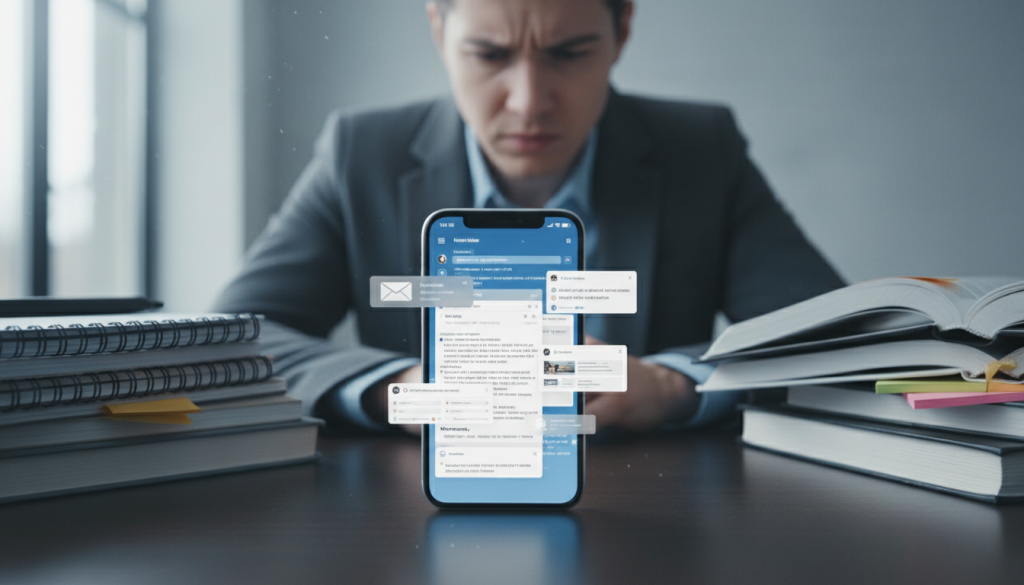
At work and in classrooms, frequent phone checks quietly erode the mental space needed for demanding tasks.
The “mere presence” effect:
The nearby device raises background alertness
Research shows that even a silent phone on a desk can increase anxiety and lower performance. Part of the brain stays on guard for potential notifications, reducing available working memory.
Students studying with a phone nearby recall less and solve fewer complex problems. Office teams drafting reports or presentations report more errors when phones are within reach.
Notification switching costs: hidden time and shallow thinking
Each glance adds seconds that accumulate into lost hours. Restarting a task after a brief check takes extra cognitive steps and produces shallower results.
This switching slows overall task completion and raises error rates in analytical work.
Creativity and deep work: what breaks when attention resets
Insight needs uninterrupted time. Constant resetting breaks the quiet thought loops that generate new ideas.
For many people, prolonged focus is harder to achieve, reducing creative output and increasing mental strain.
Mental health impacts tied to excessive phone use and social media
When screen-based interaction replaces in-person time, emotional cost shows up gradually. A 2014 study linked high social media use with greater rates of anxiety and depression.
Loneliness and depression: when online time replaces real interactions
Text exchanges and feeds cannot fully replace face-to-face contact. People who spend more time online often report feeling lonelier even as their social networks expand.
Real-world interactions provide emotional cues and comfort that digital messages lack, which can weaken relationships with friends and family over time.
Anxiety, FOMO, and the pressure to stay available
Constant checking fuels a sense of needing to be everywhere at once. That pressure raises baseline anxiety, keeps the nervous system on edge, and reduces recovery time between tasks.
Comparison on social media amplifies dissatisfaction with one’s own life for some people and can deepen anxious feelings.
Stress and burnout when work bleeds into personal time
Work messages that arrive after hours make boundaries hard to maintain. Over time, this steady intrusion increases daily stress and can lead to burnout.
Healthier patterns prioritize intentional phone use and protect time with family and friends. Simple steps—like defined work hours and device-free meals—help restore balance.
- Excess use can both reflect and worsen mental health problems.
- Curated social posts may increase depressive mood through comparison.
- Clear boundaries reduce stress and protect relationships and recovery.
Sleep, recovery, and the next-day attention penalty
Nighttime scrolling sets up a penalty that shows up as foggy focus the next day.
How late-night phone use disrupts sleep and cognitive performance
Using a smartphone close to bedtime shortens sleep and fragments deep rest. Screen exposure suppresses melatonin and raises alertness, making it harder to fall and stay asleep.
When sleep suffers, working memory shrinks and decision quality drops. The next-day attention penalty shows as reduced patience, slower thinking, and weaker memory recall.
Simple boundary: keeping smartphones out of the bedroom
A single, realistic change is to charge the phone in another room and use a separate alarm clock. This small step removes late-night temptation and protects uninterrupted sleep.
Better sleep supports mood, resilience, and overall health. As sleep improves, daytime self-control and focus get easier, which lowers compulsive phone use during work and family time.
- Why it matters: late phone checks create a measurable next-day attention penalty.
- How it works: screen light and stimulation interrupt sleep cycles and raise cognitive load.
- Practical step: keep the mobile phone out of the bedroom and set a non-phone alarm.
- Benefit: improved sleep boosts mental health, focus, and decision-making.
Signs, triggers, and withdrawal symptoms people should watch for
Clear warning signs often appear before someone realizes screen habits have taken over daily life.
Behavioral red flags
Neglecting responsibilities — missed deadlines, unfinished chores, or skipped appointments signal a problem.
Hiding use or lying about hours spent on a phone, and irritability when interrupted, are common functional cues.
Phantom vibrations, frequent nighttime checking, and conflicts over time spent on games or apps also belong on the checklist.
Trigger mapping
Simple trigger mapping helps identify common prompts: boredom, loneliness, stress, and awkward social moments often precede automatic checks.
Logging which feelings and contexts lead to a reach for the smartphone makes patterns visible and fixable.
Withdrawal and early symptoms
When people cut back, expect short-term restlessness, cravings, irritability, trouble concentrating, and sleep shifts.
These are normal signals that the habit loop is being challenged, not proof of failure.
Self-audit setup
Keep a brief usage log for several days. Note the app, emotion, and times day when nonessential checks occur.
Look for high-risk windows (morning scroll, midday breaks, late-night checks) and target those first.
- Checklist: trouble completing tasks, isolation, concealing use, FOMO, and anxiety or depression signals.
- Action: log usage, map triggers, and plan short, focused changes around peak times.
How to manage screen time step-by-step without going cold turkey

Small, staged changes help people reclaim attention without cutting off essential contact. The goal is gradual reduction so daily life, family needs, and work remain intact.
Set realistic goals by times of day
They start with short, clear rules: no phone for the first 30–60 minutes after waking and a single 20–30 minute check window midmorning. A defined evening cutoff—no device an hour before bed—protects sleep and next-day focus.
Turn off nonessential notifications
Disabling alerts and using Do Not Disturb or Focus modes is the fastest win. Allow only critical contacts and calendar alerts to reduce anxiety spikes and constant switching.
Create phone-free zones
Meals, meetings, driving, workouts, and family time become device-free by rule. Visible boundaries make behavior repeatable and show others the new norm.
Reduce temptation and make the phone less sticky
Remove or hide social media and gaming apps. Move remaining apps off the home screen, enable grayscale, and use a minimalist layout to lower visual pull.
Replace scrolling and add social accountability
Swap short checks for walks, reading, or a hobby that lowers stress and boosts health. Try the phone stack game with friends or shared household rules for weekly support.
- Practical tip: Limit checks gradually (15 → 30 → 60 minutes).
- Support: Use friends or family for encouragement and progress checks.
- Outcome: Reduced screen time, better focus, and lower anxiety over hours and weeks.
Digital detox and longer-term support for lasting change
A focused day away from apps gives practical data about what really requires a phone. A short, planned break helps people see which alerts are essential and which are habit.
Digital detox day planning
Pick a date and tell friends and family. Choose rules: emergency-only or fully offline. Prepare alternatives—books, errands, exercise, or scheduled meetups.
- Decide check windows and store phones out of sight.
- Plan hourly activities to reduce cravings and boredom.
- Keep an emergency contact plan for others who may need you.
When professional help is appropriate
If compulsive phone use continues or depression and anxiety worsen, seek structured care. Evidence-based options include CBT, individual therapy, group programs, and specialist detox centers.
These are skills-based supports, not punishment. They teach coping tools to replace compulsive checking and protect daily functioning.
Offline support that restores relationships
Join clubs, volunteer, or set weekly meetups with friends and family. Face-to-face interactions rebuild trust and reduce loneliness. Over time, intentional use of smartphones protects sleep, health, and close relationships.
Conclusion
The daily cost of quick checks adds up, quietly stealing time and focus.
The core thread: phone-driven habit loops and small dopamine hits reset attention and reduce deep thinking, sleep, and satisfaction in everyday life.
Practical next steps are simple and repeatable: identify triggers, log phone use, set clear times of day for checks, turn off nonessential notifications, and create phone-free zones to protect work, relationships, and health.
Progress relies on systems more than willpower. Occasional relapse is feedback, not failure. Choose one or two tips to try today, plan a short detox window, and seek support from friends, family, or a professional if needed.
FAQ
What causes mental fatigue from excessive screen time?
Mental fatigue often comes from cognitive load — the brain juggling many tasks at once. Constant notifications, switching between apps, and multitasking drain attention and reduce working memory capacity, making even simple tasks feel exhausting.
How do notifications and feeds fragment attention?
Notifications create frequent context switches. Each alert pulls attention away, forcing the brain to reorient. Over time these interruptions increase switching costs, slow task completion, and promote shallow thinking instead of sustained focus.
Is the device itself the problem or the apps on it?
It’s usually the apps and their design. Social platforms, games, and shopping apps use variable rewards and cues that encourage repeated checking. The device acts as a highly convenient delivery system for those engaging experiences.
What common patterns indicate problematic smartphone use?
Signs include compulsive checking, losing track of time, neglecting responsibilities, and prioritizing online interactions over face-to-face contact. Hiding usage or feeling irritable when separated from the device are also red flags.
How does the dopamine loop reinforce compulsive checking?
Small unpredictable rewards — likes, comments, new content — trigger dopamine hits. Repeated exposure builds tolerance, so users check more often to chase the same reward, which entrenches habitual behavior.
Why do phones make it harder to resist temptation than other distractions?
Smartphones combine portability, endless content, and immediate social feedback. This constant access plus personalized feeds and notifications creates persistent cues that are difficult to ignore in daily life.
Can having a phone nearby affect performance at work or school?
Yes. The “mere presence” of a phone can raise anxiety and reduce cognitive capacity. Even if not in use, its presence increases the likelihood of distraction and lowers performance on complex tasks.
What are notification switching costs and how do they impact productivity?
Switching costs are the time and mental effort lost when shifting between tasks. Frequent notifications lengthen completion times, reduce accuracy, and impair the depth of thought needed for creative or analytical work.
How does excessive screen time affect creativity and deep work?
Constant interruption resets focus and prevents the long, uninterrupted stretches required for deep work. This fragmentation reduces opportunities for reflection, idea synthesis, and complex problem solving.
What mental health issues are linked to heavy phone and social media use?
Heavy use can worsen loneliness, depression, anxiety, and stress. Social comparison, fear of missing out (FOMO), and pressure to be constantly available can erode well-being and disrupt recovery from daily stressors.
How does late-night phone use harm sleep and next-day focus?
Blue light and stimulating content suppress melatonin and delay sleep onset. Poor sleep reduces next-day attention, memory, and emotional regulation, creating a cycle of worse device use and impaired function.
What behavioral triggers often lead to compulsive phone checking?
Common triggers are boredom, loneliness, stress, awkward social situations, and transitions like waiting or commuting. Identifying these moments helps map risk and design alternative responses.
What withdrawal symptoms might appear when cutting back on phone use?
People may experience restlessness, cravings, irritability, trouble sleeping, or heightened anxiety. These symptoms usually lessen with time as new habits and offline routines form.
How can someone set up a simple self-audit for phone use?
Track screen time and app usage for several days, note emotional states and triggers, and identify high-risk times. Small, objective logs reveal patterns and clarify where limits will have the biggest impact.
What practical steps reduce screen time without going cold turkey?
Set realistic daily goals, disable nonessential notifications, use Do Not Disturb or Focus modes, and create phone-free zones like meals and bedrooms. Gradual changes—removing apps, using grayscale, and simplifying the home screen—lower temptation.
How can people replace scrolling with healthier activities?
Replace short checking rituals with brief walks, breathing exercises, reading, or social rituals at meals. Planning specific alternatives for high-risk times makes it easier to choose beneficial behaviors instead of reflexive scrolling.
What is a digital detox day and how should it be planned?
A detox day is a planned period offline. Preparation includes notifying contacts, scheduling offline activities, and setting realistic boundaries. Clear goals and enjoyable alternatives improve the chance of a successful reset.
When is professional help appropriate for problematic phone use?
Seek professional support if use causes substantial life disruption, persistent mood problems, or if attempts to cut back fail. Cognitive behavioral therapy, structured digital detox programs, and counseling can provide lasting strategies.
How can social accountability support lasting change?
Shared rules, group challenges, and simple rituals like the “phone stack” at meals create external accountability. Friends, family, or coworkers can reinforce boundaries and celebrate progress, making new habits stick.