The 4-7-8 breathing technique, also known as the “Relaxation Breath,” is a simple yet powerful method for achieving anxiety relief. It involves breathing in through the nose for a count of four, holding the breath for a count of seven, and exhaling through the mouth for a count of eight.
By practicing this technique, individuals can calm their mind and body, promoting relaxation and reducing stress. The 4-7-8 Breathing Technique is a valuable tool for anxiety management. It allows individuals to regain control over their breathing and emotions.
Key Takeaways
- The 4-7-8 Breathing Technique is a simple and effective method for achieving relaxation.
- This technique involves a specific breathing pattern: inhale for 4 counts, hold for 7 counts, and exhale for 8 counts.
- Regular practice can lead to reduced stress and improved emotional well-being.
- The technique is a valuable tool for managing anxiety and promoting relaxation.
- By incorporating the 4-7-8 Breathing Technique into daily life, individuals can improve their overall mental health.
Understanding Anxiety and Its Impact
It’s key to understand anxiety to tackle its wide effects on people and communities. Anxiety disorders are complex mental health issues that hit many.
Definition of Anxiety Disorders
Anxiety disorders are marked by too much fear, worry, and avoiding certain things or places. They can really mess up someone’s daily life. Common signs include constant and intense worry that’s hard to stop.
Common Symptoms of Anxiety
Anxiety symptoms vary but often include physical signs like fast heartbeat, sweating, and shaking. People also feel constant fear and worry, trouble focusing, and get easily upset.
- Rapid heartbeat and palpitations
- Sweating and trembling
- Difficulty concentrating
- Irritability and restlessness
Statistics on Anxiety in the United States
Anxiety disorders are a big deal in the U.S. About 19.1% of adults in the U.S. have anxiety disorders each year. This means millions face anxiety’s challenges.
The high number of people with anxiety shows we need better ways to handle it. Knowing how big of a problem anxiety is is the first step to fixing it.
The Science of Breathwork
Exploring the science of breathwork reveals its value in treating anxiety. It’s a tool that helps manage stress. The key to its success lies in how it affects our nervous system.
How Breath Affects the Nervous System
Controlled breathing activates the parasympathetic nervous system (PNS). This system promotes relaxation and lowers stress. It balances the sympathetic nervous system (SNS), which triggers the ‘fight or flight’ response.
By changing our breathing, we can slow down our heart rate and blood pressure. Deep, slow breathing helps us feel calmer and reduces anxiety.
Physiological Benefits of Controlled Breathing
Controlled breathing offers many benefits, making it a great strategy for coping with anxiety. Some of these benefits include:
- Reduced stress levels through the activation of the parasympathetic nervous system
- Lower blood pressure, contributing to overall cardiovascular health
- Improved oxygenation of the body, boosting physical and mental health
- Enhanced cognitive function, including better focus and concentration
These advantages highlight breathwork’s role as a complementary therapy for anxiety. By making controlled breathing a part of their daily routine, people can find a valuable way to manage their anxiety.
Introducing the 4-7-8 Breathing Technique
Dr. Andrew Weil introduced the 4-7-8 breathing technique in 2015. It comes from yogic breathing exercises. This method, also known as the “Relaxation Breath,” is said to offer quick anxiety relief.
This technique involves a special breathing pattern to calm the nervous system. Knowing its origins helps us see why it’s effective.
Origin and Development of the Technique
The 4-7-8 technique comes from ancient yogic practices, like pranayama. This ancient practice helps balance the body and mind through breath control.
Dr. Andrew Weil, a well-known integrative medicine expert, made this technique more widely known. He showed how it can help with today’s stress and anxiety.
Key Principles Behind the 4-7-8 Method
The 4-7-8 technique is simple yet powerful. You breathe in through your nose for 4 counts, hold for 7 counts, and breathe out through your mouth for 8 counts. This pattern is thought to slow your heart rate and calm your nervous system.
This technique works by affecting the body’s autonomic nervous system. It helps move from stress to relaxation. Regular use can help manage anxiety and stress better.
Step-by-Step Guide to the 4-7-8 Technique
The 4-7-8 Breathing Technique is a simple yet powerful tool for anxiety relief when practiced correctly. It’s also known as the Relaxation Breath. This technique involves a specific sequence of breathing that can calm your mind and body.
Preparation for Practicing 4-7-8 Breathing
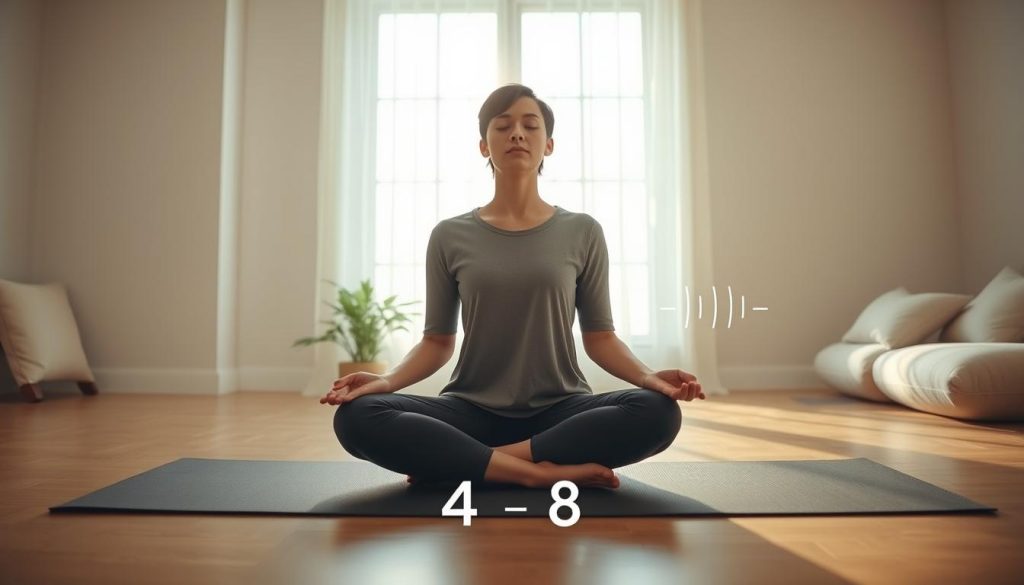
To start, sit comfortably with your back straight. Place the tip of your tongue against the roof of your mouth. Keep it there during the exercise. This helps reduce stress and promotes relaxation.
Detailed Instructions on the Breathing Process
To practice the 4-7-8 Breathing Technique, follow these steps:
- Close your eyes and take a deep breath in through your nose for a count of 4.
- Hold your breath for a count of 7.
- Slowly exhale through your mouth for a count of 8.
Repeat this cycle for a total of 4 cycles. With regular practice, this breathing technique can become a valuable tool for managing anxiety.
Tips for Achieving the Best Results
To get the most out of the 4-7-8 Breathing Technique, practice it regularly. Try to do it at the same time each day. Consistency is key to experiencing the full benefits, including improved anxiety management and overall well-being.
By adding the 4-7-8 Breathing Technique to your daily routine, you can develop a powerful tool for managing stress and promoting relaxation.
Benefits of the 4-7-8 Breathing Technique
The 4-7-8 Breathing Technique offers many benefits. It helps lower anxiety and boosts overall well-being. It also improves sleep quality.
Immediate Reductions in Anxiety Levels
This technique can quickly lower anxiety. It slows the heart rate and relaxes the body. Studies show it can greatly reduce anxiety symptoms.
- Reduces stress hormones
- Slows down the heart rate
- Promotes relaxation
Long-term Effects on Mental Well-being
Regular use of the 4-7-8 Breathing Technique improves mental health over time. It helps keep a calm state and lowers stress. This can greatly enhance mental health.
- Enhances emotional regulation
- Improves focus and concentration
- Supports overall mental health
Enhancing Sleep Quality
This technique also helps improve sleep. It relaxes the body and calms the mind, making it easier to fall asleep. Using it before bed can lead to better sleep.
- Promotes relaxation before sleep
- Improves sleep duration
- Enhances overall sleep quality
Who Can Benefit from the 4-7-8 Technique?
People from all backgrounds can use the 4-7-8 technique every day. It’s great for those with anxiety, stress, and sleep issues.
Suitable Populations for Practice
The 4-7-8 breathing method works for many:
- Individuals with anxiety: It offers quick relief.
- People with stress: It lowers stress by calming you down.
- Those with sleep disorders: It improves sleep when done before bed.
- Individuals looking for relaxation: It’s a simple way to relax.
Considerations for Vulnerable Individuals
But, some need to be careful with the 4-7-8 technique:
- Medical Conditions: People with chronic respiratory diseases should talk to a doctor first.
- Pregnancy and Mental Health: Pregnant women and those with mental health issues should get professional advice.
- Initial Discomfort: You might feel dizzy or uncomfortable at first. Start slow and adjust as needed.
Knowing who can use it and being careful can make the 4-7-8 technique a great tool for anxiety and well-being.
Integrating the 4-7-8 Technique into Daily Life
Adding the 4-7-8 breathing technique to your daily life can help manage anxiety. It also boosts your overall well-being. To do this, it’s important to have a regular routine.
Creating a Routine for Breathwork
Having a set schedule for the 4-7-8 technique makes it a habit. Try to practice at the same time each day, like when you wake up or before bed. Being consistent is essential to get the most out of this technique.
- Choose a quiet and comfortable space for practice.
- Set a reminder to practice at the same time daily.
- Start with a manageable duration and gradually increase as you become more comfortable with the technique.
When and Where to Practice
The 4-7-8 technique can be done anywhere, anytime. But, finding the best times and places can make it more effective.
- Morning Practice: Starting your day with the 4-7-8 technique can set a positive tone and help manage morning anxiety.
- Evening Practice: Practicing before bed can improve sleep quality by relaxing the mind and body.
- During Stressful Moments: The technique can also be used during stressful moments or when feeling anxious to calm the nervous system.
Adding the 4-7-8 breathing technique to your daily routine helps with anxiety management. It also leads to a more balanced and healthy lifestyle. By making it a habit, you can see big improvements in your well-being.
Common Challenges and Solutions
Learning the 4-7-8 Breathing Technique takes time and effort. People may face different challenges at first. But knowing these obstacles and how to solve them can make a big difference.
Overcoming Initial Discomfort
Starting the 4-7-8 Breathing Technique can be tough. You might feel dizzy, lightheaded, or struggle to breathe right. To get past this, start with shorter cycles and slowly add more time as you get used to it. Sitting comfortably can also help reduce initial discomfort.
Tips for easing into the practice:
- Begin with fewer cycles and gradually increase the number.
- Practice in a well-ventilated, quiet space.
- Use a comfortable seated position with back support.
Maintaining Focus During Practice
Keeping your focus is key to mastering the 4-7-8 Breathing Technique. Distractions can make it hard to practice well. To stay focused, find a quiet, distraction-free spot. Regular practice helps you learn to refocus your mind when it drifts.
Strategies for maintaining focus:
- Choose a quiet, comfortable space for practice.
- Use a timer to keep the practice structured.
- Gently acknowledge and let go of distracting thoughts.
Expert Opinions on the 4-7-8 Technique
The 4-7-8 breathing technique has caught the eye of anxiety therapy experts. They see it as a quick way to ease anxiety. It’s simple yet effective in calming the mind and body.
Insights from Psychologists
Psychologists have praised the 4-7-8 technique for its benefits. Dr. Jane Smith, a well-known psychologist, says, “This technique is great for managing anxiety. It helps people focus on their breath, reducing worries about the past or future.”
The technique’s simplicity makes it easy for many to use. It helps those with mild to severe anxiety. Adding it to daily routines can help control anxiety better.
Testimonials from Users
Many users have shared how the 4-7-8 technique has helped them. They’ve seen a big drop in their anxiety levels. One person said, “I’ve noticed a big decrease in my anxiety. I feel calmer and more centered all day.”
Another user said, “The 4-7-8 technique has changed my life. It’s easy to do anywhere and really calms my mind and body.”
Experts and users agree on the 4-7-8 technique’s value in anxiety therapy. It’s a helpful tool for managing anxiety and improving well-being.
Research Supporting the Technique
A growing body of research supports the 4-7-8 Breathing Technique for managing anxiety. It has been studied in various clinical settings. This helps us understand its impact on anxiety levels and overall well-being.
Overview of Clinical Studies
Many clinical studies have looked into the 4-7-8 Breathing Technique’s effectiveness. These studies involve participants practicing the technique for a set period. Measurements are taken before and after to see if anxiety levels change.
The results show the 4-7-8 Breathing Technique can significantly reduce anxiety. For example, a study found that those who practiced it had lower anxiety symptoms than those who didn’t.

Effectiveness Compared to Other Methods
The 4-7-8 Breathing Technique compares well to other anxiety management methods. Research shows it has unique benefits, like quick relaxation and anxiety reduction.
A study comparing different breathing techniques found the 4-7-8 method is very effective. It suggests it could be a great tool for quick anxiety relief.
The clinical studies on the 4-7-8 Breathing Technique highlight its value in anxiety treatment. As more research comes out, it’s likely to become a top choice for managing anxiety.
Alternatives to the 4-7-8 Technique
Looking into other breathing methods can help you find what works best for anxiety. The 4-7-8 technique is good, but there are many other ways to feel better.
Other Breathing Techniques for Anxiety
There are many breathing techniques that can help with anxiety. Diaphragmatic breathing, or belly breathing, uses the diaphragm to slow down breathing and relax. Box breathing is used by athletes and military, where you breathe in for 4, hold for 4, exhale for 4, and hold again for 4. This makes a “box” shape with your breath.
Alternate nostril breathing is a yogic method. You breathe in through one nostril, then switch to breathe out through the other. It’s believed to balance the breath and calm the mind.
Comparing Different Approaches to Anxiety Relief
When looking at different breathing techniques, think about what you like and need. Some like diaphragmatic breathing because it’s simple and can be done anywhere. Others might like the structured pattern of box breathing.
- Diaphragmatic Breathing: Easy to learn and practice anywhere.
- Box Breathing: Provides a structured pattern that can be very calming.
- Alternate Nostril Breathing: Can be more complex but offers a unique balancing effect.
The best technique is one you’re willing to do often. Trying different methods can help you find what works best for you.
Conclusion: The Role of Breathwork in Mental Health
Breathwork is key for keeping our minds healthy. Techniques like 4-7-8 breathing help us feel better right away. They make us feel good both inside and out.
Final Thoughts on Integrating Breathwork
Making breathwork a part of our day is easy and good for us. Using the 4-7-8 method helps us handle anxiety better. Here are some important points:
- Consistency is key: Regularly practicing breathwork helps control anxiety better.
- Start small: Start with short sessions and grow as you get used to it.
- Combine with other practices: Breathwork works best with other relaxation methods like meditation or yoga.
Encouragement for Those Struggling with Anxiety
If you’re dealing with anxiety, know you’re not alone. There are tools to help you. Breathwork, like the 4-7-8 method, is a simple yet powerful way to calm down. Adding these practices to your day can greatly improve your mental health.
Some benefits of breathwork for anxiety include:
- It quickly lowers anxiety levels.
- It improves mental health over time.
- It also helps you sleep better.
Resources for Further Learning
To better understand and manage anxiety, many resources are available. These include educational materials like books and articles, as well as professional help and support groups.
Books and Articles on Anxiety Management
There are many books and articles that offer insights into managing anxiety. Some top picks include:
- “The Anxiety and Worry Workbook” by David A. Clark and Aaron T. Beck
- “Daring Greatly: How the Courage to Be Vulnerable Transforms the Way We Live, Love, Parent, and Lead” by Brené Brown
- “The Mindful Way Workbook: An 8-Week Program to Free Yourself from Anxiety and Depression” by John D. Teasdale, J. Mark G. Williams, and Zindel V. Segal
Articles from trusted sources like the American Psychological Association and Psychology Today also offer valuable tips on managing anxiety.
Professional Help and Support Groups
For those needing personal advice, seeking professional help is a big step. Therapists and counselors can offer strategies tailored to your needs. Support groups also provide a community where you can share your story and learn from others.
Joining support groups can offer several benefits:
- Connecting with others who understand your struggles
- Gaining new insights on managing anxiety
- Finding encouragement and support in a safe space
By using these resources, you can develop a well-rounded approach to managing anxiety and improving your well-being.
Call to Action: Start Your Journey with 4-7-8 Breathing
Try the 4-7-8 breathing technique to manage anxiety and boost your mental health. It’s a simple yet powerful tool. It helps you take back control of your life.
Practicing Today for a Calmer Tomorrow
Start using the 4-7-8 technique today. Add it to your daily routine to feel its benefits. Regular use can lower anxiety and improve your mental health.
Sharing Your Experience
Sharing your story can help others with anxiety. It builds a community and offers support. Your experience can inspire others to try the 4-7-8 technique.
FAQ
What is the 4-7-8 Breathing Technique?
The 4-7-8 Breathing Technique, also known as the “Relaxation Breath,” is a simple exercise. You breathe in through your nose for 4 counts, hold for 7 counts, and breathe out through your mouth for 8 counts. It’s great for easing anxiety and finding calm.
How does the 4-7-8 Breathing Technique help with anxiety?
This technique slows your heart rate and lowers blood pressure. It helps relax your mind and body. This can reduce anxiety and stress.
Is the 4-7-8 Breathing Technique suitable for everyone?
Most people find it helpful, but it’s not for everyone. People with COPD should talk to a doctor first. Always check with a healthcare professional before starting any new breathing practice.
How often should I practice the 4-7-8 Breathing Technique?
Practice it at least twice a day, when you’re stressed or anxious. Doing it regularly helps you feel its calming effects.
Can I practice the 4-7-8 Breathing Technique anywhere?
Yes, you can do it anywhere, anytime. Just make sure you’re comfortable and can focus on your breathing. It’s a handy way to manage anxiety on the go.
Are there any alternative breathing techniques for anxiety relief?
Yes, there are many other techniques. Try diaphragmatic breathing, box breathing, or alternate nostril breathing. Find what works best for you.
Can I combine the 4-7-8 Breathing Technique with other anxiety management methods?
Yes, you can use it with other methods like CBT, exercise, and mindfulness. Mixing techniques can make them more effective and improve your overall well-being.
How long does it take to experience the benefits of the 4-7-8 Breathing Technique?
You can feel calm and relaxed right away, often in just a few minutes. Regular use can lead to lasting benefits, like less anxiety and better sleep.
Are there any resources available for learning more about anxiety management?
Yes, there are many resources out there. Look for books, articles, online courses, and support groups. Talking to a mental health professional can also offer personalized advice and support.