The term “Fear of Missing Out,” or FoMO, is key in mental wellness. It started in 2004. It’s the worry that others are having fun while you’re not.
This feeling can really affect your mind and emotions, more so with social media. Online, we see everyone’s life, making us feel left out. This can lead to anxiety and depression.
It’s important to understand FoMO. It helps us deal with its effects on our mental health.
As we spend more time online, knowing about FoMO is vital. It helps us stay mentally well and balanced.
Key Takeaways
- FoMO, or Fear of Missing Out, is an emotional response to perceived exclusion from rewarding experiences.
- This phenomenon has gained prominence with the rise of social media platforms.
- FoMO can adversely affect mental health, leading to conditions such as anxiety and depression.
- Understanding FoMO is vital for emotional stability and overall well-being.
- Addressing FoMO requires a thorough approach to mental wellness that considers its psychological impacts.
Understanding FoMO and Its Impact on Mind Health
FoMO, or the “Fear of Missing Out,” is a big topic in Mind Health and Mental Wellness. It’s about feeling anxious because you think others are having more fun. This feeling can change how people act and affects their Psychological Health a lot.
Definition of FoMO
FoMO is feeling worried that others are having fun without you. This makes people try hard to stay connected and keep up with what others are doing. But, it can make you feel bad about yourself and increase Social Anxiety.
The Rising Prevalence of FoMO
With social media, FoMO has become more common, mainly among the young. Studies show that those who use social media a lot feel worse about themselves and get more anxious. This shows we need to understand and handle FoMO better for our Mind Health.
FoMO vs. Other Psychological Phenomena
FoMO is like Social Anxiety and depression but is different because it’s about needing constant validation. It’s made worse by being online a lot. It also shows how important feeling connected is to our mental health.
The Origins of the Fear of Missing Out
The Fear of Missing Out (FoMO) comes from social, psychological, and cultural factors. It shows how FoMO impacts our emotional and mental health, mainly through Social Media.
Social Media Triggers
Social media is a big trigger for FoMO. People compare their lives to others online, feeling anxious. They see others’ lives as more exciting, which affects their mental health.
This constant comparison creates a false view of reality. It makes people want to experience things they feel they’re missing.
Psychological Underpinnings
FoMO is linked to psychological theories like self-determination theory. It says not meeting social needs can make us feel bad. Feeling left out can lead to loneliness and anxiety.
This stress can hurt our mental health, making us more anxious about missing out.
Cultural Influences
Today’s culture pushes for constant connection. This makes people feel they must always be online. Feeling rushed can increase anxiety and lower emotional stability.
How FoMO Affects Emotional Well-Being
Fear of Missing Out (FoMO) greatly affects our emotional well-being. It ties into anxiety, self-esteem, and emotional stability. Knowing how FoMO impacts these areas helps us understand its effects on our mental health.
Connection to Anxiety Levels
FoMO is closely tied to increased anxiety and distress. People with FoMO often feel left out or not good enough when they compare themselves to others. Studies show that using social media more can lead to higher anxiety levels.
The constant fear of missing out can start a cycle of anxiety. This cycle harms our mental health.
Impacts on Self-Esteem
The fear of missing out can lower our self-esteem and make us feel less than others. This feeling comes from comparing ourselves unfavorably to others. It makes us think others are having better experiences.
This pattern can lead to a negative view of ourselves. It affects our emotional stability and mental wellness.
Emotional Exhaustion
FoMO can cause emotional exhaustion. People may spend too much time trying to get social approval. This can lead to feeling overwhelmed by anxiety from comparing ourselves to others.
This emotional fatigue shows we need ways to improve our emotional health. We need to fight the bad effects of FoMO.
The Neuroscience Behind FoMO
Looking into the neuroscience of the Fear of Missing Out (FoMO) gives us deep insights. It shows how our brain behaves and feels emotions. By knowing which brain parts affect our feelings, we can improve our Mind Health.
Studies show that the amygdala is key in handling emotions related to social stuff. This small part of the brain gets active when we feel left out. The prefrontal cortex helps us make choices and control our impulses, which can help or hurt our FoMO feelings.
Dopamine and Reward Systems
FoMO really gets our reward system going, thanks to dopamine. This chemical is linked to happiness and wanting to do things. When we see our friends on social media, dopamine makes us want to check in more.
This constant need for social approval can hurt our Brain Fitness. Chasing quick happiness can lead to emotional ups and downs in the long run.
The Role of Social Validation
Many people crave social approval, which makes FoMO worse. When we get dopamine from social interactions, we start to need these connections for happiness. This can make us feel anxious and change how we see ourselves.
It’s important to tackle the psychological side of FoMO. We need to work on keeping our Mind Health balanced and healthy.
Signs and Symptoms of FoMO
Understanding FoMO’s signs is key to its impact on our emotional and mental health. Knowing these signs helps us manage stress and recover. These signs show up in how we act, feel, and change our habits.
Recognizing Personal Indicators
Signs of FoMO include constantly checking social media and feeling anxious when left out. Feeling less than in social comparisons is also a sign. These behaviors show a deep fear of missing out, affecting our emotional well-being.
Behavioral Changes to Observe
Those with FoMO might avoid real-life social events but spend more time online. This change shows how stress from seeking social approval can alter our daily lives.
Emotional Signs
Feeling lonely, guilty about missed chances, and upset by social exclusion are emotional signs of FoMO. These feelings show how important social approval is for our emotional and mental health.
| Signs of FoMO | Emotional Impact | Behavioral Response |
|---|---|---|
| Compulsive social media checking | Anxiety, inadequacy | Increased online activity |
| Feelings of loneliness | Guilt about missed experiences | Withdrawal from social settings |
| Perceived social exclusion | Distress and urgency for social validation | Changes in daily routines |
Age and FoMO: A Demographic Perspective
The Fear of Missing Out (FoMO) affects people in different ways, depending on their age. It’s important to understand these differences. This helps us see the unique challenges each age group faces with their Mind Health and Emotional Stability.
FoMO in Adolescents
Adolescents are very prone to FoMO. Studies show that too much social media use in teens can lead to more anxiety and lower self-esteem. They often feel the need to be constantly connected, which can make it hard for them to interact in real life.
The constant stream of perfect online lives can make them feel like they’re not good enough. This can really hurt their Mind Health.
FoMO in Adults
In adults, FoMO is often linked to worries about work and social standing. The pressure to keep up with others can cause stress and anxiety. It can also make them feel unhappy with their lives.
Adults have to balance work and personal life, which can make them fear missing out on success. This fear can affect their mental health and happiness.
FoMO Across Generations
How much FoMO people experience can vary by generation. Younger people are more at risk because they rely on social media for validation. Older people might use social media less, which can mean they experience FoMO less often.
Looking at these differences helps us understand how age affects FoMO. It shows how FoMO impacts emotional and mental health at different stages of life.
FoMO and Social Media Consumption
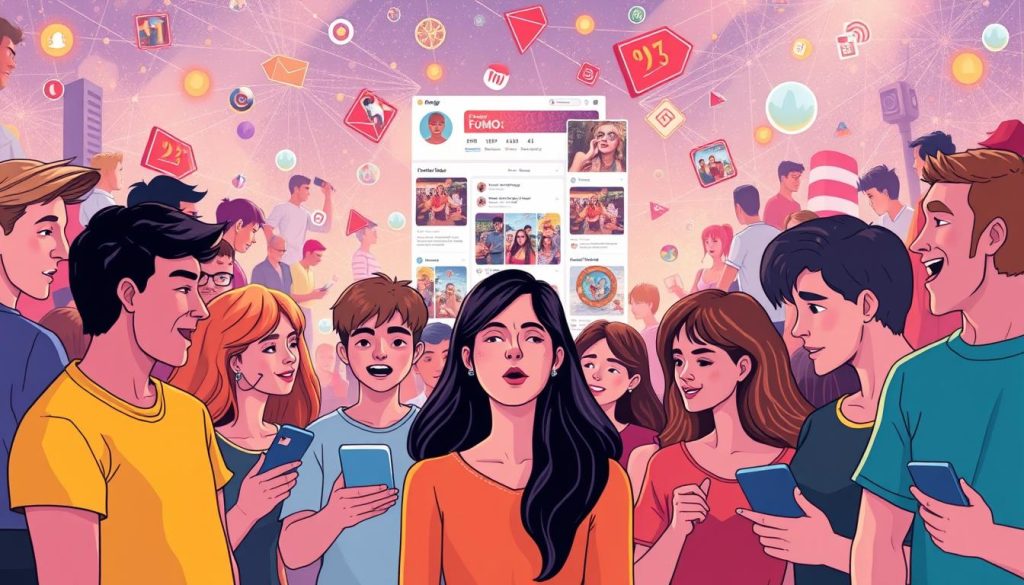
Social media has changed how we interact, leading to more time online and feelings of FoMO. Sites like Instagram play a big role in this. They show us perfect lives, making us feel left out.
This section looks at how digital spaces make us feel FoMO. It also talks about how this affects our emotional well-being.
The Role of Platforms Like Instagram
Instagram makes us feel FoMO with its beautiful pictures. It shows us things we can’t have, making us feel left out. When we see happy moments online, we might feel sad or not good enough.
This can make us keep checking social media. It’s hard to focus on real life when we’re always looking at screens.
FOMO Triggers in Digital Spaces
Many things in the digital world trigger FoMO. Notifications and updates make us feel like we need to be online all the time. This makes us anxious and want to check our feeds constantly.
This constant need to stay updated can make us anxious. It’s hard to enjoy our lives when we’re always comparing them to what we see online.
The Impact of Constant Updates
Social media makes us compare our lives to what we see online. This can make us feel anxious and not good enough. The fear of missing out makes us keep checking our feeds, which is bad for our mental health.
As we spend more time online, it’s hard to keep a balanced view of our lives. It’s important to remember that what we see online isn’t always real.
Coping Mechanisms for FoMO
It’s important to fight the fear of missing out (FoMO) for our mind health. Using good coping strategies helps manage stress and boosts our well-being. This part talks about ways to lessen FoMO’s impact.
Mindfulness Techniques
Mindfulness, like meditation and deep breathing, is great for FoMO. It helps us stay in the moment, feel calm, and grounded. Mindfulness helps us accept our feelings without comparing ourselves to others, which lowers anxiety.
Limiting Social Media Use
Setting limits on social media is a strong way to fight FoMO. By limiting online time, we focus more on real-life talks. This improves our emotional bonds and reduces the stress from constant digital updates.
Engaging in Offline Activities
Doing things offline, like joining clubs or spending time with loved ones, helps a lot. These activities give us real connections and joy that online life can’t match. They make us feel more connected and improve our mental health.
| Coping Mechanism | Description | Mind Health Benefits |
|---|---|---|
| Mindfulness Techniques | Practices like meditation and deep breathing that focus on present awareness. | Promotes calmness and reduces anxiety. |
| Limiting Social Media Use | Consciously restricting time spent on social media platforms. | Enhances real-life relationships and reduces feelings of inadequacy. |
| Engaging in Offline Activities | Participation in hobbies and social events outside of digital spaces. | Fosters meaningful connections and increases overall life satisfaction. |
FoMO in Professional Environments
In today’s fast-paced world, FoMO is a big worry in work places. It affects how well we work and our mental health. Being always connected to social media can make it hard to focus, leading to stress.
Knowing how FoMO impacts work helps companies create better work environments. They can work on making a healthier balance between work and personal life.
Impact on Workplace Productivity
FoMO can hurt how well we do our jobs. We might spend too much time checking social media instead of doing our work. This can lead to more mistakes, missed deadlines, and lower job performance.
It’s important for both workers and bosses to understand this. They need to find ways to improve how well the team works together.
Strategies to Combat FoMO in Teams
To fight FoMO in teams, it’s key to talk clearly about what’s expected. Having real-life conversations helps build a supportive team. This makes us less dependent on social media.
Also, teaching stress management skills can help. It gives workers tools to deal with distractions from FoMO.
Balancing Work-Life Dynamics
It’s vital to keep work and personal life separate. Companies can host workshops on finding this balance. They can teach the value of mental health.
Encouraging workers to take breaks helps them come back refreshed. This improves how well the team works together.
The Role of Community in Mitigating FoMO
Community is key in fighting the fear of missing out (FoMO). It builds strong social bonds that boost emotional stability and mental health. Connecting with others in meaningful ways can ease FoMO-related feelings.
Building Strong Social Connections
Creating deep relationships fights loneliness tied to FoMO. These connections help emotional stability. Feeling supported boosts mental health, shielding against negative feelings from social comparison.
The Importance of Support Systems
Support from friends and family is essential for FoMO coping. A strong support system builds resilience against social pressure. It enhances emotional stability, helping navigate social life’s highs and lows.
Participating in Community Events
Joining community events strengthens social bonds and a sense of belonging. These activities lessen FoMO’s psychological effects by creating positive shared moments. They encourage real-life connections over online comparisons.
FoMO and Mental Health Disorders
FoMO, or the fear of missing out, affects mental health a lot. Studies show it’s linked to Anxiety and Depression. Knowing this helps us understand and treat these issues better.
Connection to Anxiety Disorders
FoMO is closely tied to Anxiety disorders. People with FoMO feel anxious because they’re worried about missing out. This worry makes them feel disconnected, leading to more anxiety and social withdrawal.
FoMO’s Role in Depression
FoMO can make Depression symptoms worse. Social media, which often triggers FoMO, can make people feel bad about themselves. This leads to more time on social media, making feelings of sadness worse.
Co-occurring Issues
FoMO often happens with other mental health problems like ADHD and eating disorders. It makes treatment harder and can worsen mental health. Treating FoMO and other disorders together is key to improving mental health.
Strategies for Mental Resilience
Building mental resilience means taking steps to strengthen your emotional strength and flexibility. You can use different strategies to improve your coping skills and mental health. These actions help fight against the negative effects of FoMO.
Developing Healthy Coping Skills
It’s key to develop healthy coping skills to fight FoMO. Journaling lets you express yourself and think deeply. Doing hobbies helps you focus and feel accomplished. Getting professional help also builds a strong support system, helping you grow mentally.
Fostering Positive Mind Health
Practicing gratitude is important for positive mind health. Recognizing your achievements, no matter how small, boosts your self-worth. This positivity helps reduce feelings of not being good enough, often caused by social media comparisons.
Encouraging Self-Reflection
Regular self-reflection helps you understand your feelings and how social media affects you. Knowing what triggers your FoMO lets you plan better. This clarity helps you make smarter choices about social activities and online interactions.

The Future of FoMO Research
Researchers are diving deep into FoMO, uncovering new insights. These findings are shaping our understanding of its impact on mind health. They aim to uncover the underlying cognitive factors, leading to better psychological treatments.
Emerging Studies on Mind Health
Recent studies are looking at the cognitive and emotional sides of FoMO. They want to know how it affects mind health. The goal is to create more effective treatments for FoMO, which is growing in concern.
Anticipated Trends in FoMO
As social media use grows, FoMO is expected to change. Researchers are studying its effects on different groups. They aim to understand how social media affects feelings of exclusion.
Potential Interventions in Psychology
New psychological interventions might include mindfulness and emotional intelligence. These could help people deal with FoMO. They aim to build resilience and improve mental health.
Real Stories: Overcoming FoMO
Personal stories are key to understanding how to beat FoMO. By sharing their journeys, people show us how to handle the fear of missing out. Each story offers a unique way to improve our mental health.
Case Studies of Recovery
Case studies show how people have fought and won against FoMO. They use different methods like thinking strategies, joining groups, and reflecting on themselves. These personal plans are essential for fixing mental health, showing we all need our own way.
Personal Testimonies
Real-life tales reveal the emotional battles against FoMO. People share their fights and wins against anxiety. Their stories of strength and finding ways to cope inspire others on their own paths.
Lessons Learned from Real Experiences
Studying these stories teaches us a lot about beating FoMO. The wisdom from those who’ve succeeded helps us understand mental wellness better. Their shared tips encourage and motivate others to overcome FoMO.
Conclusion: The Path Forward
Living in today’s world, finding a balance in life is key to fighting the Fear of Missing Out (FoMO). It’s important to have a good mix of online and offline social interactions. This balance helps improve personal well-being and emotional stability.
Also, mind health awareness plays a big role in dealing with FoMO’s mental effects. Knowing how FoMO affects our minds helps us take steps to get better. This awareness helps us value emotional stability more and reduces anxiety from feeling left out.
As technology keeps changing what we expect from life, it’s vital to be strong against outside pressures. By focusing on mind health awareness and finding life balance, we can handle our social world better. These thoughts remind us to take real steps towards feeling emotionally stable despite FoMO.